Units generated:
ACCU
Purchased by:
Private market
Project proponents:
New Forests Asset Management
Land management activities:
SFM is the appointed land manager for the project with responsibility for carrying out all land management activities.
Verification doc
Clean Energy Regulator Register
Walters is one of nine carbon forestry projects established under New Forests’ **ActivAcre program in Tasmania’s Woodsdale region, which is managed on the ground by SFM.
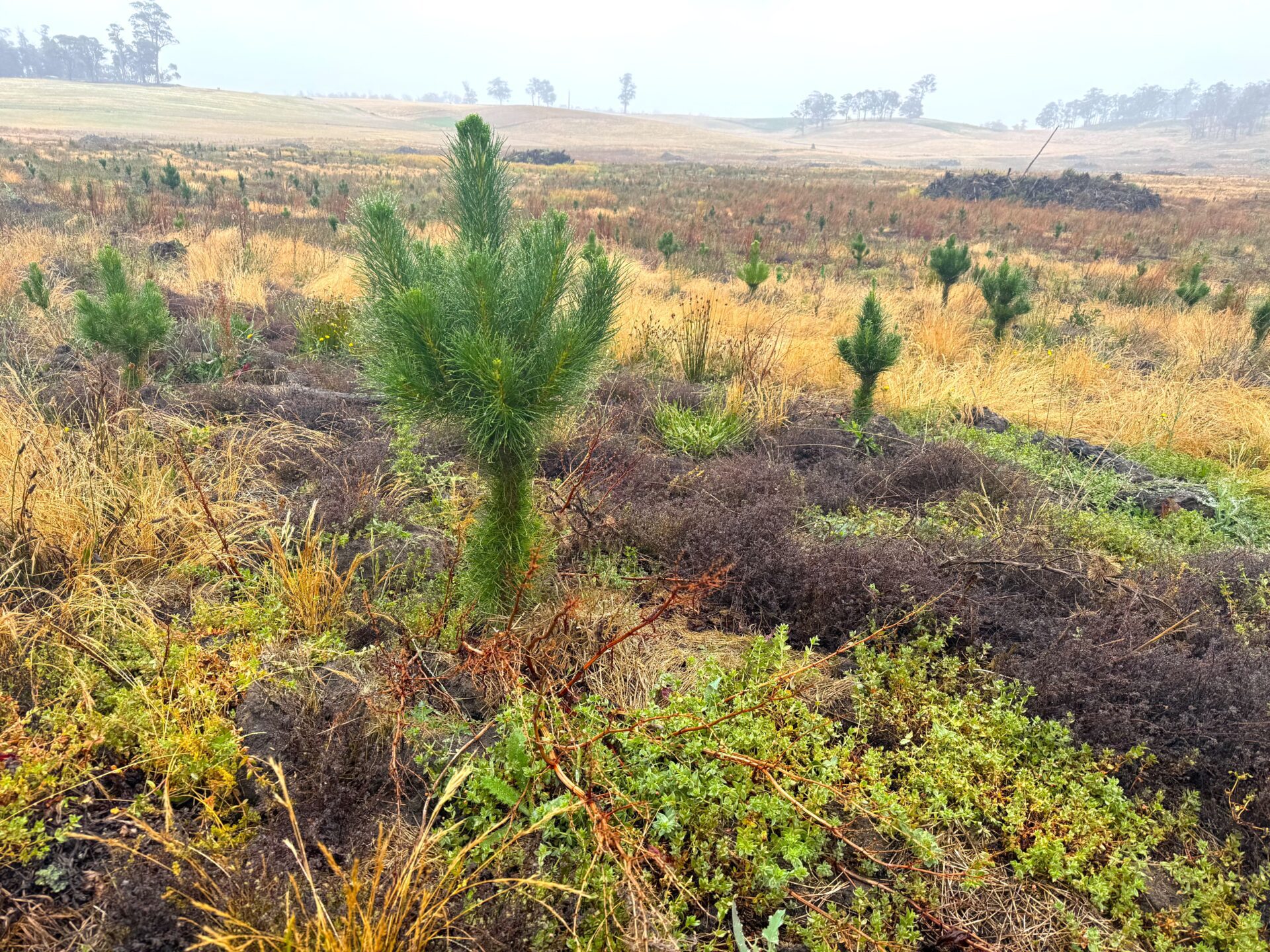
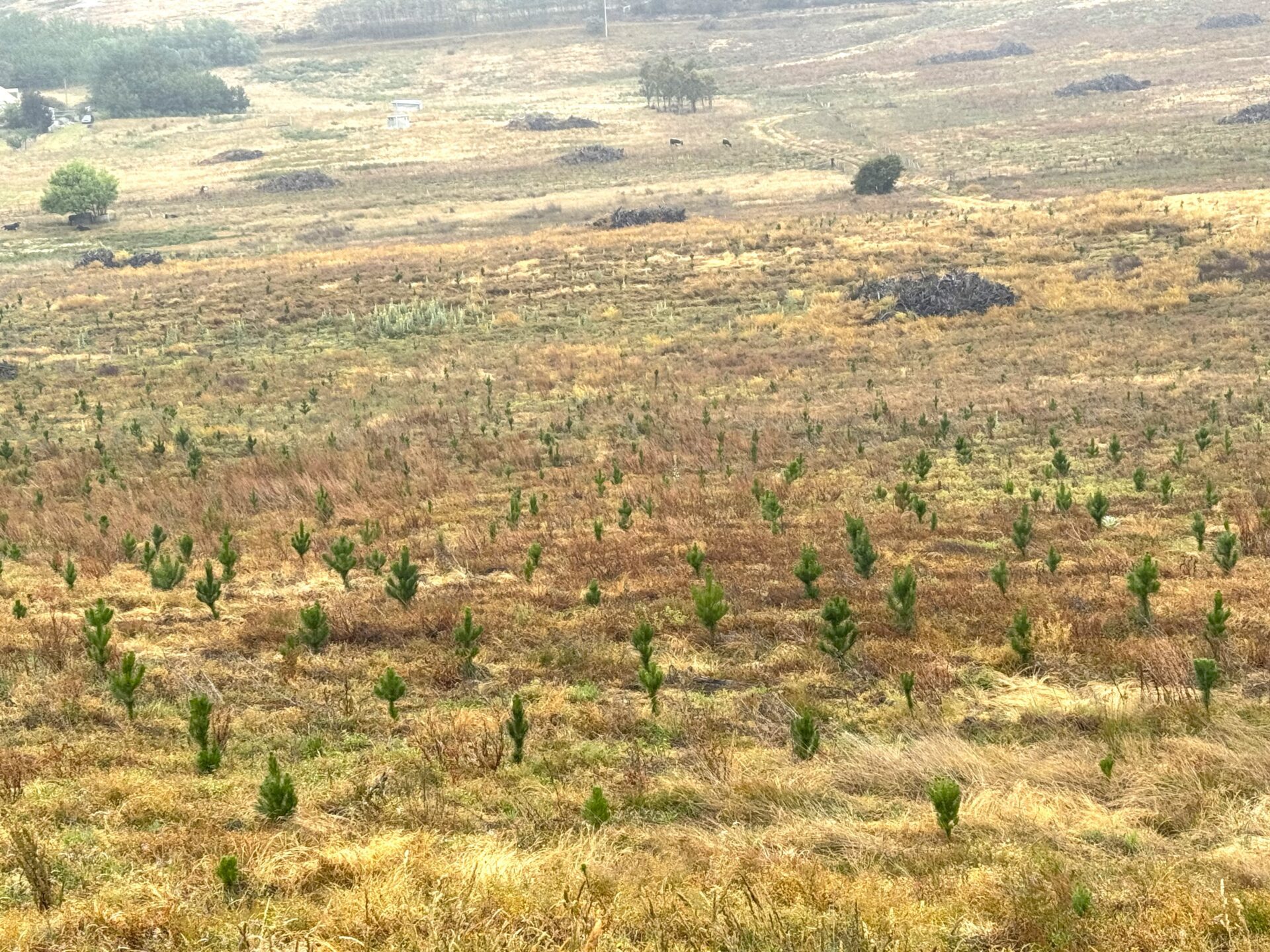
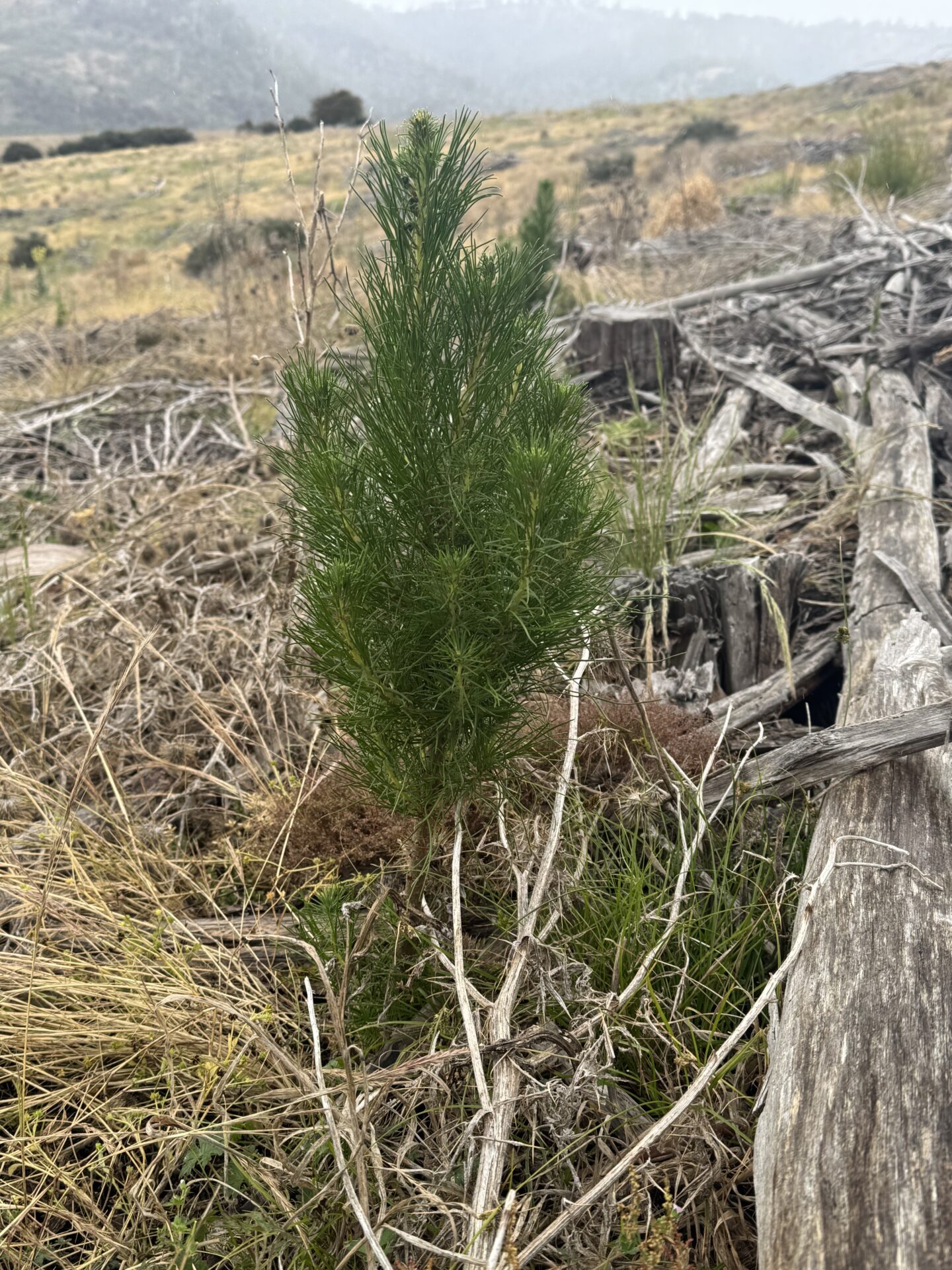
The 254-hectare property includes 150 hectares of newly established Pinus radiata plantation, planted in 2024. Previously planted with Eucalyptus nitens under a former Managed Investment Scheme (MIS) which had been partially reverted to agriculture. Under the approved carbon project, the site has been converted to softwood forestry, aligned with long-rotation carbon sequestration and sawlog production goals.
Walters is registered under *Schedule 3 of the Plantation Forestry Methodology — a classification selected to reflect the property’s partial reversion to agriculture, while securing stronger ACCU outcomes than would be possible under Schedule 2.
Land use history and carbon transition
The Walters property was previously purchased by a local farmer from an MIS entity with the intent to fully revert the land to agriculture. However, reversion costs were higher than expected, and the land was sold before the process was completed. This presented an opportunity to return the site to productive forestry, this time under a carbon-first model under the ActivAcre program.
Site quality and plantation strategy
Classified as Site Quality 3 (SQ3), the property features moderate rainfall and soil fertility — ideal for softwood plantation forestry. Site Quality is a key determinant of growth potential, ranging from SQ1 (most productive) to SQ5 (least). SQ3 provides balanced productivity, supporting both carbon credit generation and high-value timber.
To optimise outcomes, the Pinus radiata plantation will be thinned at approximately year 16, promoting stem quality and increased carbon storage. Final harvest is scheduled at year 30, in line with industry-standard long-rotation management.
Benefits of carbon project aggregation
Walters forms part of the broader aggregated Woodsdale cluster, with nine plantation projects established within a 20-kilometre radius — three in 2024 and six in 2025. Eight are already registered with the Clean Energy Regulator; the ninth is due for registration in 2026.
The clustered model delivers multiple operational and strategic advantages, including:
- Coordinated contractor and operations management
- Reduced infrastructure and haulage costs
- Shared fire prevention and response resources
- Consistent regional wood supply
- Local economic benefits and community engagement across multiple properties
Comparison of Plantation Methodology Schedules
Forestry carbon projects generate Australian Carbon Credit Units (ACCUs). The type of project and site characteristics significantly influence ACCU outcomes:
- Schedule 1 carbon projects deliver the highest volume of ACCUs for a given site. *Schedule 3 projects are comparable or slightly lower, while Schedule 2 projects typically deliver the fewest ACCUs. The applicable schedule is determined by the Emissions Reduction Fund (ERF) ACCU Scheme eligibility criteria and cannot be selected at will by the landholder or project proponent.
- Once eligibility under the relevant methodology is established, site quality—particularly rainfall and soil fertility—further affects ACCU yield. Sites with higher rainfall and more fertile soils typically generate more ACCUs than those with lower rainfall and less fertile conditions.
- As a general guide, Schedule 1 and 3 sites in Tasmania with favourable growing conditions (i.e., high rainfall and fertile soils) can yield approximately 300–400 ACCUs per hectare over the life of the project. In contrast, sites with lower rainfall and soil fertility may generate around 180–250 ACCUs per hectare for the same project type.
About the ActivAcre program
**ActivAcre is a carbon forestry program in Tasmania that enables farmers and landowners to lease their land for tree planting. Developed by New Forests and managed by SFM, the program provides landholders with a reliable source of income while supporting environmental outcomes such as climate change mitigation and biodiversity enhancement.
SFM works closely with landowners to maximise the potential of underutilised land, offering a sustainable and economically viable approach to land management.