The Carbon Market Institute (CMI) published a Policy Brief, that outlines key topics CMI considers should be prioritised for review and consultation in the Australian Government’s forthcoming 2026-27 Review of the Safeguard Mechanism (2026-27 Review), that is anticipated to commence in July.
CMI emphasised the goal of supporting policy stability and certainty for investment against the backdrop of an increasingly uncertain geopolitical and economic environment. It also noted the Safeguard Mechanism’s supporting role in sectoral decarbonisation pathways.
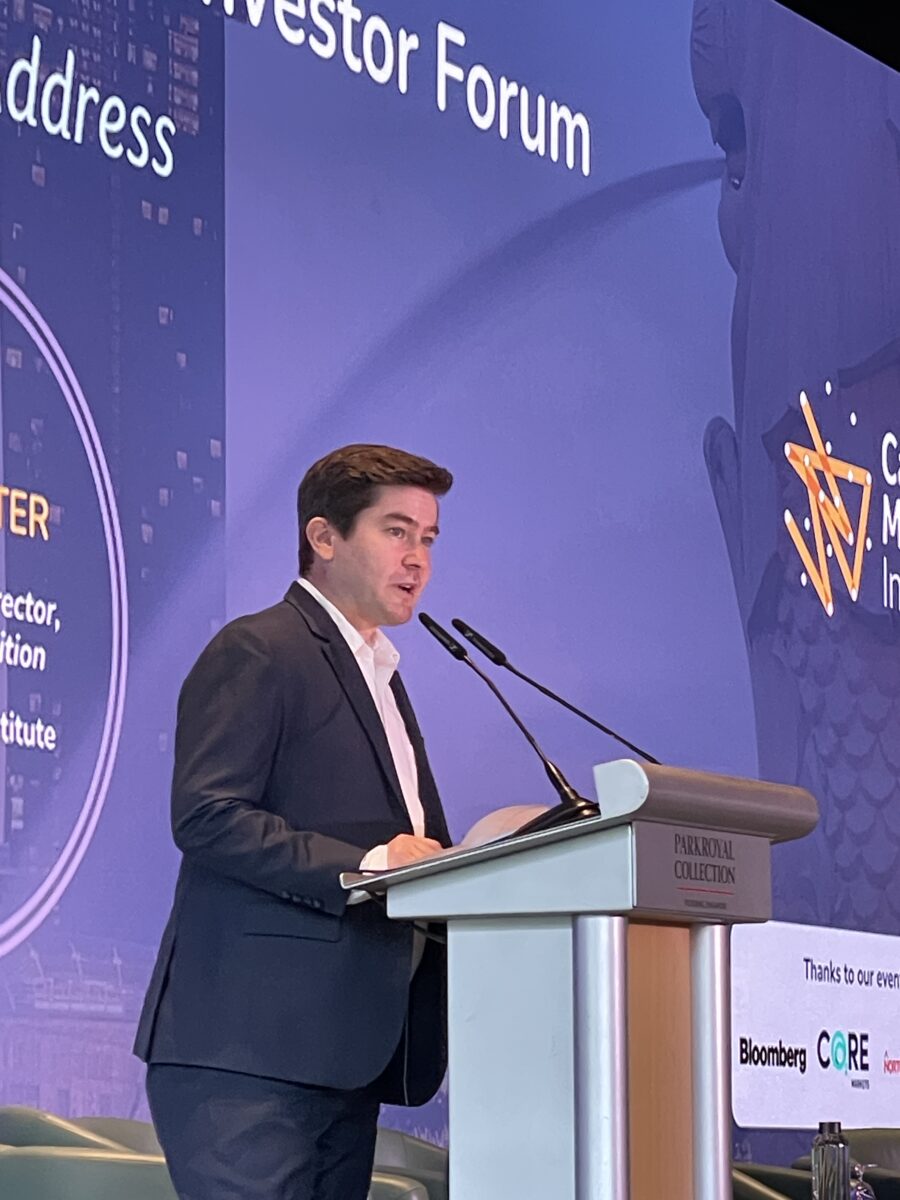
“Australia’s policy horizon needs to better align with industrial investment decision-making to enable capital allocation towards 2035 and beyond,” said Kurt Winter.
“While the transformation of industry will underpin Australia’s long-term economic resilience, policymakers also need to carefully manage the transition to avoid carbon leakage and reduce the risk to sovereign manufacturing capability”, Winter added.
CMI also highlighted the goals to broaden and deepen the Safeguard Mechanism and better enable on-site emissions reduction without limiting compliance options.
“By broadening and deepening the Safeguard Mechanism, Australia could unlock additional abatement opportunities while leveling the playing field within certain industries”, Winter noted.
“Direct industrial decarbonisation remains a key policy goal and design elements could be calibrated to increase public confidence in the mechanism’s effectiveness.”
CMI’s Policy Brief outlines 4 priorities for further investigation and consultation as part of the 2026-27 Review:
- Consider lowering the current covered emissions threshold for facilities below 100,000 t CO2-e per annum.
- Identify opportunities to better enable on-site abatement through design settings, while preserving compliance pathways.
- Clarify policy measures to mitigate the risk of carbon leakage within the Safeguard Mechanism and through complementary policies.
- Clarify the post 2030 baseline decline rate, for covered facilities to support continued investment certainty for industry.
These priorities were developed in consultation with CMI’s Safeguard Mechanism Taskforce and broader membership.
CMI’s Safeguard Mechanism Co-Chair Bret Harper of RepuTex highlighted that while facilitating greater on-site emissions reductions is anticipated to be a major focus of the review, this should not be conflated with restricting access to the ACCU Scheme.
“There are a range of design elements in the Safeguard that could be recalibrated to better enable on-site abatement, including: broadening and deepening coverage; clarifying the role of the Cost Containment Measure and Safeguard Mechanism Credit (SMC) banking,” Harper observed.
“Restricting ACCU access would do nothing to drive additional on-site emission reductions at industrial facilities when there are broader technological and commercial barriers to making these investments,” Harper added.
Harper noted the need to manage the suitability of carbon leakage arrangements for a scheme where almost all high emitting facilities are trade exposed to some degree.
“It is clear the Safeguard Mechanism Review will need to consider the recommendations made by the recent Carbon Leakage Review and re-assess its approach to Trade-Exposed Baselines Adjusted (TEBA) eligibility.”
“The government should also review complementary policy measures to directly support industrial transformation when TEBA eligible facilities are at risk of necessitating continuous, long-term shielding from emission accountability.” said Harper.
Harper also emphasised the need to clarify the post 2030 baseline decline rate for covered facilities to support continued investment certainty for industry.
“Determining the baseline decline rate is inherently linked to all the other design elements of the mechanism. It also needs to transparently reflect the international commitments Australia has made to mitigating climate change with an approach that is consistent and repeatable when it comes time to set future baseline decline rates,” Harper concluded.
The Safeguard Mechanism is administered by the CER under the National Greenhouse and Energy Reporting Act 2007 (NGER Act). It puts a limit on an individual facility’s net emissions within a given reporting period. Under current settings, baselines for each facility decline at a flat, linear rate of 4.9% annually from 2023-24 to 2029-30. The decline rate for 2030-31 onwards is yet to be determined but baselines will ultimately decline to net zero in 2049-50.
Facilities can also purchase unlimited Australian Carbon Credit Units (ACCUs) or Safeguard Mechanism Credits (SMCs) to cover required emission reductions not achieved on-site.
CMI’s policy brief Priorities for the Australian Government’s 2026-2027 Safeguard Mechanism Review is available here.
For enquires and interview please contact: Kurt Winter, Director Corporate Transition at kurt.winter@carbonmarketinstitute.
CMI has a range of resources available to better understand the reformed Safeguard Mechanism, including our published FAQs.
CMI’s Safeguard Mechanism Taskforce is currently preparing to engage with formal government consultations to inform the 2026-27 Review including with DCCEEW and the Climate Change Authority.
About the Carbon Market Institute and the Safeguard Mechanism Taskforce
The Carbon Market Institute (CMI) is a member-based institute accelerating the transition towards a negative emission, nature positive world. It champions best practice in carbon markets and climate policy, and its ~140 members include primary producers, carbon project developers, Indigenous organisations, legal, technology and advisory services, insurers, banks, investors, corporate entities and emission intensive industries. The positions put forward constitute CMI’s independent view and do not purport to represent any CMI individual, member company, or industry sector.
CMI’s Safeguard Mechanism Taskforce is a key focal point for industry to test policy and market design concepts as part of CMI’s advocacy and engagement on the 2026-27 Review. The Taskforce is open to CMI member organisations that are covered entities under the Safeguard Mechanism as well as their advisers and financial institutions that are active in the demand side of Australia’s carbon market. This composition is intended to leverage the experience of covered industrial entities as well as the expertise of CMI’s membership on industrial decarbonisation and net zero transition.