Carbon Market Institute responds to Greens opposition to ACCU integrity reforms and IFLM
The Carbon Market Institute strongly supports accelerating genuine emissions reductions and strengthening the integrity of Australia’s carbon market. However, characterising Australian Carbon Credit Units (ACCUs) as “accounting tricks” or “get-out-of-jail-free cards” misrepresents the role of the Safeguard Mechanism and the important contribution of high-integrity carbon markets to Australia’s emissions reduction task.
The Australian Greens’ decision to oppose the Carbon Credits and Other Legislation Amendment (Integrity and Transparency) Bill 2026 and move to disallow the Integrated Farm and Land Management (IFLM) method risks undermining important reforms to strengthen the ACCU Scheme and constraining opportunities to increase genuine carbon removals across Australia’s landscapes.
CMI Chief Executive Officer Sasha Courville said Australia needed to pursue emissions reductions, carbon removals and resilience together, and that describing high-integrity carbon markets as “accounting tricks” was neither accurate nor constructive.
“Australia needs real emissions reductions. It also needs more carbon removals. We need adaptation and resilience. We need investment and innovation. We need all of these things – and we need them now.”
“There is no credible pathway to net zero that involves choosing between industrial decarbonisation and increasing carbon sequestration. We need to do both. The question is how we ensure every part of the system is high integrity, effective and driving genuine climate outcomes.”
Opposing the Integrity Bill is counterproductive and undermines critical ACCU reforms.
The Carbon Credits and Other Legislation Amendment (Integrity and Transparency) Bill 2026 implements important recommendations from the 2022 Independent Review of Australian Carbon Credit Units led by Professor Chubb, alongside subsequent reforms to strengthen the ACCU Scheme. These are substantive reforms to the architecture of the ACCU Scheme, in a process of continual improvement.
These include new consent processes for Native Title holders and claimants, strengthening alignment with the principles of Free, Prior and Informed Consent (FPIC); stronger powers for the independent Carbon Abatement Integrity Committee; and changes to the definition of abatement to incorporate value for money, providing a basis for future government purchasing to consider broader environmental, social and economic benefits alongside carbon abatement.
“It is difficult to understand how opposing legislation designed to strengthen the integrity, transparency and governance of the ACCU Scheme advances the cause of carbon-market integrity.”
“This Bill implements important recommendations from the independent ACCU Review, including stronger protections for Native Title interests, greater powers for independent integrity oversight and a value-for-money framework for government purchasing. These are precisely the kinds of reforms that should be welcomed by anyone serious about strengthening the carbon market.”
IFLM is an opportunity to increase carbon drawdown and deliver benefits in rural and regional communities.
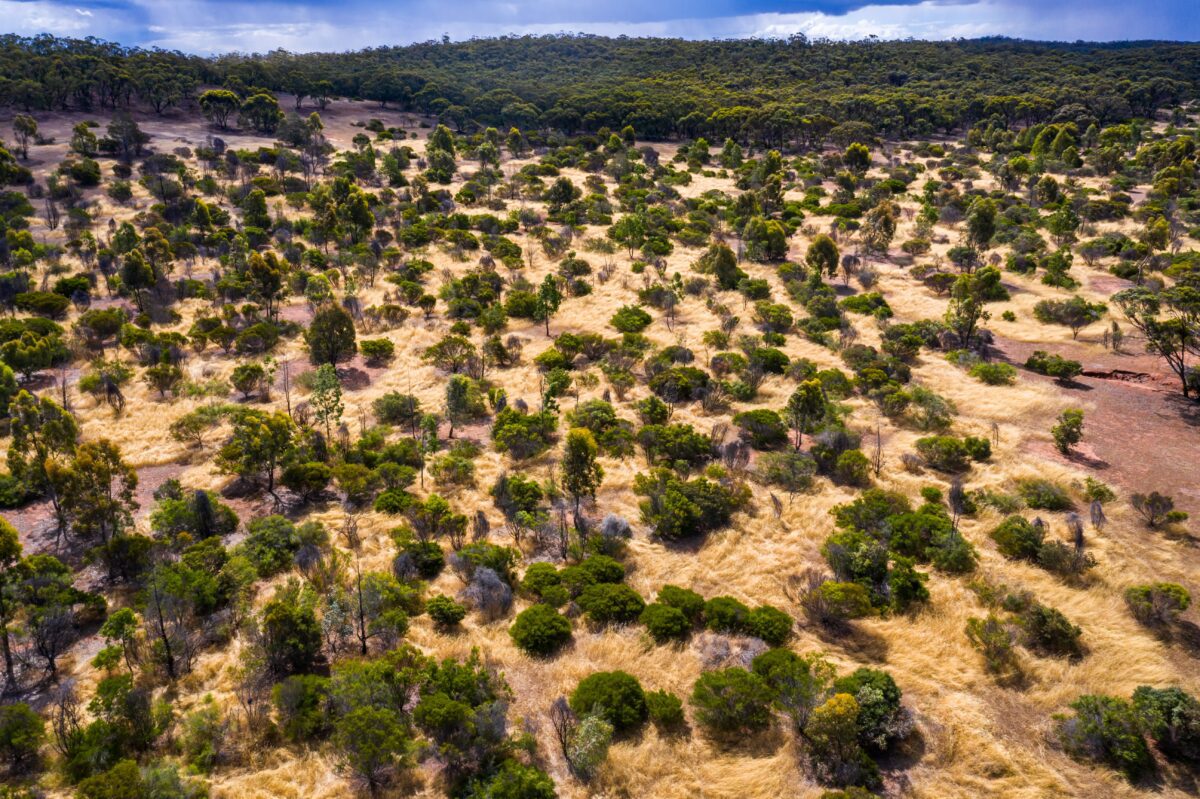
IFLM is a whole-of-farm, modular carbon farming method designed to enable land managers to undertake multiple carbon management activities on the same property, including vegetation and soil carbon sequestration. It is intended to scale up carbon drawdown and build permanent carbon stocks across Australian landscapes, while opening carbon farming opportunities to a more diverse range of land managers and property sizes.
A well-designed IFLM method can also deliver broader environmental and regional benefits, including improved biodiversity, soil and water management, agricultural productivity, drought resilience, regional investment and economic opportunities for Traditional Owners.
Importantly, IFLM is not being introduced outside the ACCU Scheme’s integrity architecture. The method is being developed through an extensive co-design process involving government, industry, technical experts and stakeholders, and will be subject to assessment against the Offsets Integrity Standards and independent scrutiny through the Scheme’s integrity processes.
“Disallowing IFLM would be a backwards step. This is a method designed to help scale up carbon drawdown and build carbon stocks across Australian landscapes, integrating with agricultural operations and boosting productivity, profitability and economic resilience”.
Claims about “dodgy credits” are not grounded in evidence.
Carbon methodologies must be subject to rigorous scrutiny and continuous improvement. That is a strength of Australia’s integrity framework, not a reason to dismiss the carbon market as a whole. It is important to distinguish legitimate concerns about carbon-crediting methodologies from claims that all land-sector ACCUs are “dodgy”.
“The right response to questions about methodology is independent assessment, better data, stronger safeguards and continuous improvement — not shutting down legitimate sources of carbon removal.”
CMI outright rejects the assertion that deliberately removing around 40% of the ACCU market will, by itself, deliver greater emissions reductions. A contraction in the supply of ACCUs may increase the price of remaining credits but is not the same thing as driving faster on-site abatement, because genuine barriers to onsite decarbonisation exist.
The Safeguard Mechanism supported by complementary policy must drive on-site decarbonisation.
Australia’s largest industrial emitters are working to reduce their emissions. The Safeguard Mechanism is the central policy instrument for driving this transition. Accelerating decarbonisation requires addressing the barriers to on-site abatement including technology readiness, infrastructure availability, project lead times, access to finance and the technical complexity of decarbonising some industrial processes. Strengthening the Safeguard Mechanism settings, including temporal-flexibility measures and other incentives for on-site abatement, while maintaining access to high-integrity ACCUs as a compliance pathway where genuine barriers to abatement exist, are policy levers that are needed right now.
CMI rejects the suggestion that ACCUs allow polluters to simply “hide” their emissions. ACCUs are not a substitute for on-site emissions reductions, they are a lever which allows industrial sites to comply with the Safeguard Mechanism and contribute to reducing whole-of-economy emissions right now, where time, technology or other barriers delay onsite abatement. ACCUs act to set a carbon price, as well as drive finance into land-sector projects that contribute to land restoration, deliver biodiversity and nature outcomes, support Indigenous cultural practices and fire management, bring investment into agriculture, diversify farm income, support rural jobs and regional economic development.
We need every credible climate solution – now.
The latest climate science reinforces the urgency of rapid emissions reductions and the importance of carbon removals alongside deep decarbonisation. The recent UNEP report ‘Limiting Overshoot’1 shows that 1.5°C global temperature will be crossed within the next few years and that an ‘overshoot, peak, and decline’ pathway will require significantly greater subsequent carbon removal to bring temperatures back down.
Australia therefore needs to be increasing the supply of credible abatement and removals, strengthening demand for emissions reductions, and mobilising private investment across the economy.
“We are entering a period of profound climate and geopolitical uncertainty. This is not the time to narrow the range of credible climate solutions available to Australia.”
Australia should be constructive debating how to make these mechanisms work better, with stronger integrity and greater ambition – not whether to dismantle or constrain them.