CMI welcomes Government’s strong commitment to Australia’s carbon market at AER Summit
The Carbon Market Institute (CMI) has welcomed the Government’s strong reaffirmation of its commitment to Australia’s carbon market, following a speech by the Hon Josh Wilson MP, Assistant Minister for Climate Change and Energy, at the 13th Australasian Emissions Reduction (AER) Summit in Adelaide.
Addressing delegates, Assistant Minister Wilson described Australia’s carbon market as a national success story, highlighting its contribution to Australia’s climate ambition, regional economic opportunities, environmental restoration, and nature-based resilience.
CMI CEO Sasha Courville welcomed the Government’s commitment to the stability and integrity of the Australian Carbon Credit Unit (ACCU) Scheme, emphasising the importance of building on Australia’s established carbon market framework.
“The Assistant Minister’s strong endorsement of Australia’s carbon market is a welcome signal to businesses, investors, landholders and communities across the country. Australia has built a high-integrity carbon market, and the Government’s commitment to its stability and continued improvement is essential to maintaining investment confidence and accelerating emissions reduction”.
“Government and industry share a responsibility to demonstrate the tangible benefits carbon markets are delivering, from new opportunities for farmers and First Nations communities to supporting environmental restoration and investment in regional Australia.”
Strengthening integrity and market confidence
Assistant Minister Wilson highlighted the Government’s ongoing work to strengthen the ACCU Scheme through the Carbon Credits and Other Legislation Amendment (Integrity and Transparency) Bill 2026. CMI supports passage of the Bill, which advances important recommendations from the independent ACCU Scheme reviews such as reforms to Native Title consent requirements, enhanced governance and oversight, improved compliance powers, and greater flexibility to support innovation. In its submission to the Senate Inquiry, CMI highlighted the need for effective implementation, ensuring the reforms strengthen integrity and transparency while providing clear, durable signals to project proponents, investors, landholders, and carbon credit buyers.
“Integrity is the foundation of a strong and effective carbon market. We support continued efforts to strengthen transparency, accountability, and confidence in the ACCU Scheme, while ensuring reforms remain practical, proportionate and provide certainty for market participants,” Dr Courville said.
“The Climate Change Authority’s recent independent review reaffirmed the fundamental soundness of the scheme. “The next phase of reform, including updated rules and implementation guidance ahead of the Carbon Farming Initiative Rules’ April 2027 sunset, will be critical to delivering these improvements in practice.”
Progress on Integrated Farm and Land Management (IFLM)
CMI particularly welcomed the Minister’s confirmation that the latest version of the proposed Integrated Farm and Land Management (IFLM) method would shortly be presented to the Emissions Reduction Assurance Committee (ERAC), and his recognition of CMI’s IFLM Taskforce’s constructive contribution to the method development.
“The Bill’s recognition of methods that integrate sequestration and emissions avoidance is an important step towards enabling more innovative and integrated carbon farming projects. IFLM is a significant opportunity to translate this flexibility into practical benefits for landholders, strengthening agricultural systems while delivering carbon abatement and broader environmental outcomes whilst unlocking further investment into the land sector,” Dr Courville said.
Safeguard Mechanism review and industrial decarbonisation
The Assistant Minister also outlined the next steps in the Safeguard Mechanism review, with policy positions and draft rule amendments expected for consultation in early 2027and the review intended to be finalised by the end of June 2027. The review will consider alignment with Australia’s emissions reduction targets beyond 2030, industrial competitiveness and stronger incentives for onsite decarbonisation.
“The Safeguard Mechanism is critical to Australia’s industrial decarbonisation efforts and an important driver of demand and investment into high-integrity carbon credits,” Dr Courville said.
“CMI supports retaining the mechanism’s core architecture, with targeted improvements that strengthen incentives for onsite emissions reductions while preserving flexibility and investment certainty. Direct decarbonisation and high-integrity carbon markets must work together to achieve Australia’s climate ambitions.”
Building confidence through real-world outcomes
Dr Courville echoed the Minister’s call for government and industry to collectively build understanding of Australia’s carbon market contribution to accelerating emissions abatement alongside environmental, social, and economic benefits.
“High-integrity carbon projects are supporting emissions reductions, regional economic development, First Nations-led enterprises, and environmental restoration. We need to demonstrate these tangible outcomes through credible evidence and greater transparency.”
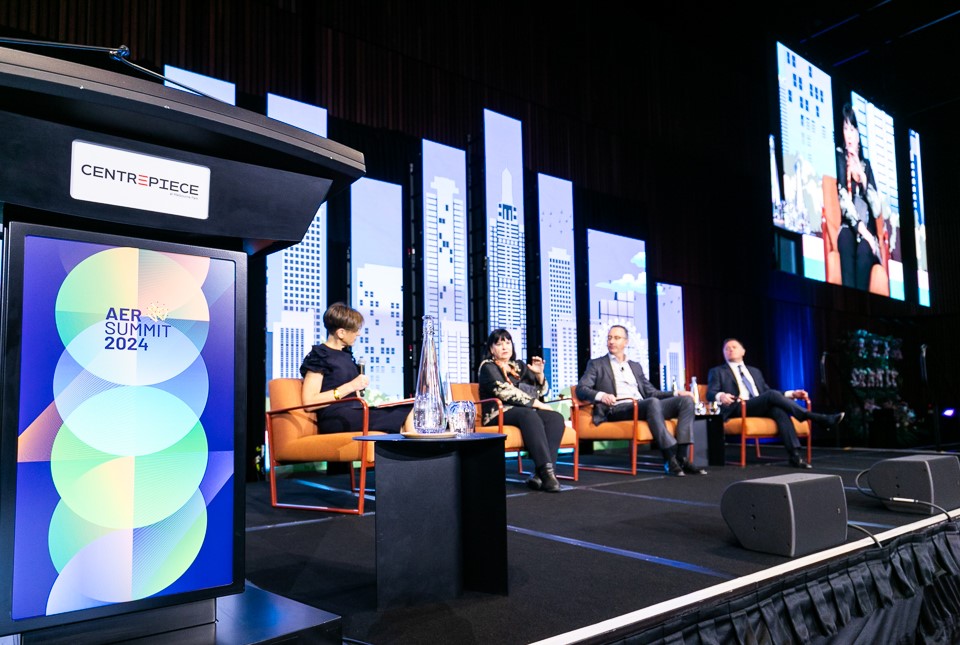
The 13th Australasian Emissions Reduction Summit, hosted by CMI at the Adelaide Convention Centre on 20–21 October brought together representatives from government, business, finance, agriculture, and the carbon market to explore the policies, investment and partnerships needed to accelerate Australia’s transition to net zero.
“CMI looks forward to continuing its constructive engagement with the Government, regulators and our members as we progress important reforms to the ACCU Scheme, the Safeguard Mechanism and the broader development of Australia’s carbon and nature markets”, Dr Courville confirmed.
Read the Assistant Minister’s full address:
https://minister.dcceew.gov.au/wilson/speeches/speech-13th-australasian-emissions-reduction-summit-adelaide